Computer Numerical Control (CNC) is a type of machining, has revolutionized engineering and manufacturing in the last few decades. Through the integration of digital technology with traditional manufacturing techniques, CNC machining has emerged as the most popular method of manufacturing high-precision components and parts in a variety of industries. This article explores CNC’s advantages, diverse applications and the mechanics.
The Mechanics of CNC Machining
CNC machining is a subtractive manufacturing process, meaning it removes the material from a block, or workpiece, in order to form the shape you want. The process is controlled by pre-programmed computer software that determines the movement of the machine. The code created for CNC machines varies based on which kind of CNC machine it is and how complex the component produced. The fundamental principle behind CNC machines is the same. A high-speed cutting tool precisely cuts the material to create the final product.
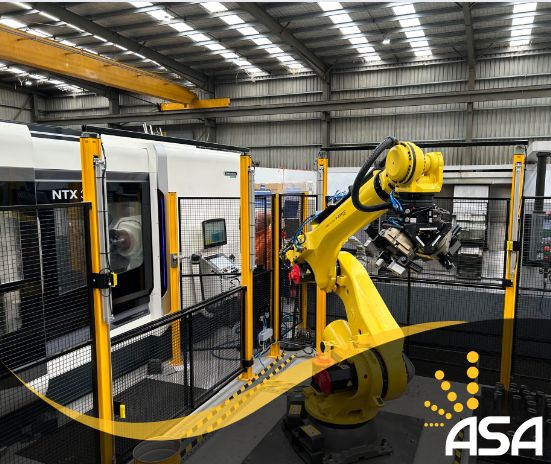
CNC machineries’ precision is among its biggest advantages. The digitalized nature of the process allows an extremely precise and consistent production, minimizing human error and ensuring uniformity across batches. This level of precision is crucial in industries where even the slightest deviation can have major implications, like aerospace, medical devices, and automotive manufacturing.
Digital Computers and their role in CNC Machine Operations
The integration of digital technology is the core of CNC machining’s efficiency and accuracy. CNC machines are controlled by software that can automate manufacturing. The software transforms computer-aided design (CAD) models into a set of precise instructions that the CNC machine is able to follow to produce the piece. These instructions determine everything from the direction and speed of the cutting tool, to the angle and depth of each cut.
In industrial facilities with large scales, computers are usually connected directly to CNC machines. This allows for seamless communication and control. This integration allows for real-time monitoring as well as adjustments and optimisation of performance. Automating CNC machining allows the continuous operation. This increases productivity and reduces lead times.
CNC Machining has Many Benefits
CNC machining is an excellent method for manufacturing. One of the biggest advantages is the capability to create complex and intricate components with high-precision. The precision of CNC machining removes the requirement to make manual adjustments or work rework, thus reducing the amount of waste and boosting efficiency. CNC machines operate continuously and are ideal for large-scale production.
CNC Machining also has another benefit: flexibility. By merely changing the program the machine is able to produce different components. CNC can be adapted to any need and is suitable for prototyping as well as mass production. This allows manufacturers to rapidly respond to changes in market demand.
Automation of CNC machining improves workplace safety. In order to minimize the risk of accidents and injuries, manual intervention can be decreased. Additionally, the consistency in quality of CNC-machined parts enhances product reliability and performance, resulting in customer satisfaction and brand reputation.
CNC Machining Services Benefits Industries
CNC machining is utilized in a variety of industries, all benefiting from its precision, efficiency, and flexibility. CNC machines are crucial in the aerospace field because they must comply with extremely rigorous safety and quality standards. CNC machining is crucial in the medical field for complex surgical devices and implants where accuracy matters.
CNC machining is used in the automobile industry to create engine parts, transmission parts, and intricate exteriors and interiors. In the electronics sector, CNC machining is used to make tiny, precise components for consumer electronics devices and communication equipment. The jewelry and art industries use CNC technology for intricate designs and custom-made pieces.
The future of CNC Machining
CNC machining will continue to improve as technology progresses. The possibilities of the CNC technology will be further enhanced by technological advancements like multi-axis machines as well as additive manufacturing and the development of advanced materials. In addition, machine learning and AI can increase CNC machining efficiency.
CNC machineries have had a significant impact on manufacturing and engineering in the present day. CNC machines offer unparalleled accuracy and versatility. Its ability of producing complex parts with high precision is a crucial tool in a variety of industries. CNC machining has a major role to play in the future of manufacturing as technology advances.