The month is over. The month is finished.
Check the restaurant’s bank account.
This number isn’t exactly what you’d hoped for.
For restaurant owners, this gap can be frustrating as the cash flow and profit appear to tell the same story. They don’t. A P&L evaluates the financial performance of a company over a specified period of time, while it is a bank account that shows the exact time of money moving into and out of the business.
Understanding the difference could alter the way a restaurant owner examines the financials of a restaurant.
Take a look at what happens in a normal week. Customers pay for meals. Employees must be paid. The invoices for food and beverages are handed out. Rent is getting closer. Deposits to credit cards are timed. Taxes on sales are collected but it is an obligation.
Already, the next week’s purchases have begun.
If you just look at the revenue or the final income, then you’ll be missing a lot of the activity.
The clue may be hidden in the prime cost
Food, drink and labour costs merit a closer look when restaurant profitability starts to go downhill.
Cost of the goods sold with labor is the main cost. Bookkeeping Chef’s guidelines place prices for the prime cost at around 60%-65 percent for most restaurants and stresses weekly monitoring rather than waiting until the end of the month.
Effective prime cost management is less about obsessing over a single percentage and more about noticing movement early.
Let’s say that a restaurant typically performs at or near its goal however, this week’s rate is higher. Maybe overtime is up. Perhaps the cost of beverages remained steady but food costs increased. The chef may look over menus as well as waste, portions sizes, vendor invoices, and purchasing if the proportion of food is higher.
The percentage is crucial. The answer is found in the activity of the restaurant.
This is possible due to the fact that everyone is able to recall what happened.
After two or three weeks, it gets more difficult to reconstruct particulars.
The Vendor’s Bills Are Received
A restaurant might purchase its ingredients this week but have to pay for the items later. This is due to the fact that understanding profits alone can not answer all cash issues.
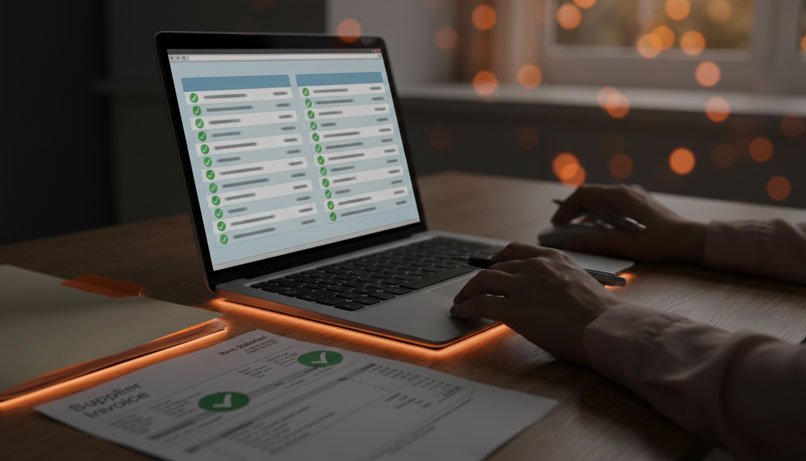
Vendor invoices need to be received, recorded and tracked before being paid. The manual process of completing this task in a busy business with many suppliers can be a massive administrative burden.
Automating the process for accounts payable can streamline this process through reducing the repetition of payments and bills. Systems for bookkeeping that connect can give owners a better understanding of their obligations, even if they’ve not yet been paid.
It’s helpful because, when viewed as a whole, the restaurant’s financial position may appear to be healthier than its actual short-term financial position.
There might be $80,000 in the account as of today. This number can be interpreted differently when it is affected by other factors such as rent as well as payroll, vendors and other obligations over the next few days.
This leads to cash flow forecasting.
Instead of asking “How many dollars of cash are we carrying?” the better question is “What is going to happen to our cash after the cash we anticipate to receive and the obligations we know about?”
The distinction can matter when deciding whether this is a suitable week to replace equipment, an additional purchase, or to preserve liquid funds.
The cash you received may Not Be Yours
Sales tax illustrates this in particular.
The cash restaurants receive from their customers will eventually need to be handled in accordance with the tax requirements. If those dollars are mentally associated with operating cash, the bank balance could create a false impression of what is in the bank to spend.
A consistent record helps restaurants stay in compliance with sales taxes and provide management an accurate view of their financials.
Accounting for restaurant operations is more effective when the financial responsibilities of each restaurant do not have to be considered separately.
Prime cost affects margin. COGS and future payments are affected by vendor purchases. Payroll is a factor that affects the amount of cash available and also the labor percentage. The availability of cash is influenced by sales tax. P&Ls report financial performance, and forecasting allows management to look ahead.
Connect the pieces.
Bookkeeping Chef is a restaurant-specific report that integrates along with system integrations. For operators who don’t want to work all night reconciling financial records, outsourced bookkeeping services will handle the bulk of accounting tasks without having to remove the owner from the financial conversation.
That last part matters.
It’s not for owners of restaurants to stop looking at the books because someone else handles them. Owners should receive information that can help them understand what’s happening.
When the P&L reports that the restaurant earned profits, but the account seems to be a bit unbalanced, don’t think that any of the numbers can be wrong.
Find out what transpired between them.
This question will tell you more about your company than any other number.