A lift station can eventually become a concrete structure filled with pumps, piping and valves, as well as controls and electrical equipment, but its efficiency is generally established earlier. Flow calculations, site elevations and system pressures and wastewater characteristics, peak conditions access to maintenance, controls and future capacity all influence the type of structure that will eventually be built.
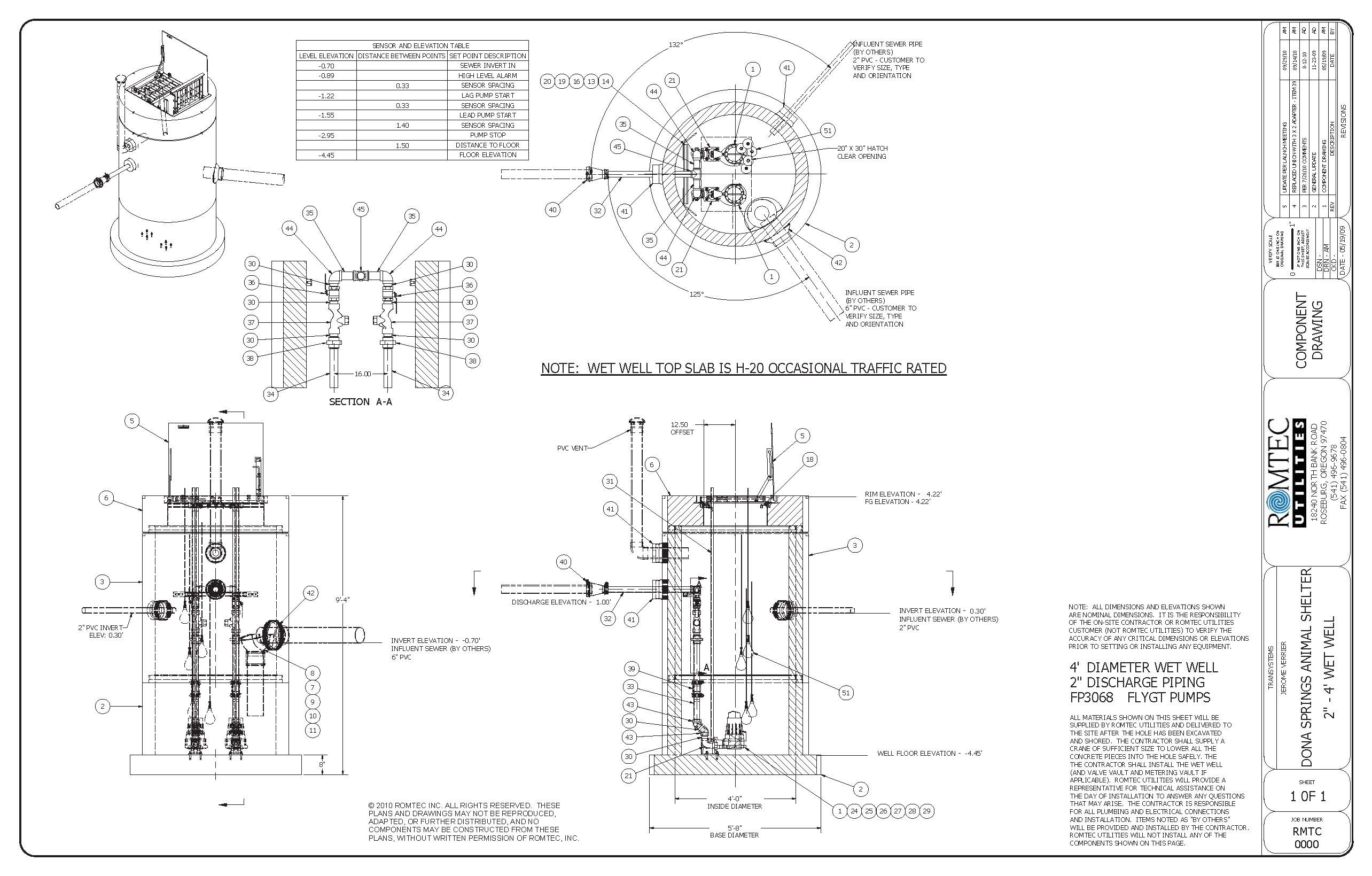
Image credit: romtecutilities.com
For project owners comparing the best lift station designers, the more useful question isn’t simply who can specify pumps. The issue isn’t who can design pumps and who can translate operating requirements and site conditions into a system that is practical to construct and maintain.
Gravity has Limits
Gravity is often the most effective way to convey wastewater, however, the terrain and patterns of development don’t always cooperate. It’s possible that new residential, industrial and commercial properties are too in the air, too far away or located in regions where gravity sewer expansion isn’t possible.
A lift station provides the required force mechanically to transport wastewater towards the next location in the collection system. Yet designing one requires understanding the operation of a normal system as well as other situations that are less convenient, such as peak inflow pumps, maintenance of pumps equipment failure, future increases in demand.
Businesses that are deemed to be among the best in the world of wastewater must consider the entire problem of conveyance instead of focusing on the station as if it were an isolated item.
Existing Infrastructure Complicates the Puzzle
Construction isn’t always the only challenge. While maintaining essential wastewater infrastructure, municipalities often need to replace or upgrade aging stations.
Existing infrastructure, like wet wells and control systems, force mains site boundaries, downstream infrastructure, may limit the design. Engineers must decide which components can be reused and what needs to be replaced as well as how the new elements will be integrated with the existing system.
Romtec Utilities works across municipal, private, commercial, industrial, retrofit, and replacement applications. This allows pumps to be created in accordance with the specific operational and ownership requirements of every project.
Stormwater follows different rules
The top creators of stromwater systems utilizing the search phrases provided should resolve a completely different hydraulic problem. Stormwater systems could experience significant changes in volume based on rainfall, drainage capacity, and discharge rates that are allowed.
Stations serving detention basins, for example, might need to temporarily store runoff until pumping it out at a controlled pace. Engineers need to consider the flow rate, conditions of the head, the environmental requirements, the flood-management goals, and the characteristics the drainage system that is receiving.
Prefabrication may move work from the jobsite
The difficulty of field assembly can create scheduling conflicts, errors in installation, change orders, and even delays. Romtec Utilities prefabricates equipment before it arrives at the site of the project.
In a controlled environment in a controlled setting, working on more assembly and quality control can speed up construction in the field. Romtec Utilities’ project approach will reduce the amount of time required to put in specific installations.
A commitment to the success of engineering includes the commissioning process.
It is not enough to set up all the necessary components to be deemed a tested one. Romtec Utilities offers installation advisors to help with the construction process that includes starting up, control panel checks and pump operation, system testing and staff training. Documentation also provides information to operators that they can refer to when maintaining the system or considering possible expansion plans.
For owners searching for the top lift station engineers, this final step deserves consideration. The final result of great engineering must be more than the creation of a few acceptable sketches. It should leave the proprietor with a functional system and a skilled staff, as well as useful documentation, and equipment built to meet the demands the station must face in everyday operation.